Showing posts with label diy. Show all posts

Thursday, April 30, 2009

Urban Gardening - Feed the Grid

As I've mentioned before, I think the "parallel world" of metropolitan rooftops is fascinating, especially when it comes to the range of creative uses of space. For example, rooftop gardening is one way city-dwellers reclaim their space and create their own urban oases (and maybe even relieve stress, save money, eat more healthily, and help the environment) by incorporating a little nature. If you're interested in doing some urban gardening of your own, here are some resources.


CONTAINER GARDENING

Urban Gardening Help - A pretty extensive site that aims to make urban gardening easy with simple instructions.

Container Gardening Tips
- a good overview of container gardening. It includes a list of plants well suited to container gardening, which includes varieties of herbs, vegetables, fruits, flowers, shrubs and trees, and "odds and ends" (i.e. aloe, dwarf pomegranate, black bamboo).

AZ: Master Garden Manual: Container Garden - Starts out with an overview and ends with a chart of information on growing a variety of vegetables which includes:
  • light requirements
  • minimum container size
  • inches required between plants in containers
  • number of days from planting seed to harvest
  • tips for a variety of vegetables

Herb Container Gardens (Utah State University Cooperative Extension) - A PDF specific to herbs that covers the following:
  • container-friendly types
  • container sizes
  • potting media
  • planting procedures
  • care and harvest methods
  • as well as a chart with information on herb: type (annual, perennial), height of growth, maintenance, and harvest / uses.

Home Fruit, Vegetable, and Nut Gardening (Aggie Horticulture, Texas A & M) has a series of Gardening Fact Sheets and Guides which cover:
  • varieties
  • soil preparation
  • fertilizing
  • planting
  • watering
  • care during the season
  • insects and diseases
  • harvesting
  • fertilizing
  • storing

Watch Your Garden Grow (University of Illinois Extension) has a directory of many popular fruits and vegetables that provides information on:
  • varieties
  • when to plant
  • spacing & depth
  • care
  • harvesting
  • common problems
  • growing
  • selection and storage
  • nutrition and health
  • preparing and serving
  • home preservation
  • recipes

A post on Raised Garden Beds from Twenty Square Feet: Life as a Container Gardener (A Crash Course on Gardening in a Ridiculously Small Space)


POTTING SOIL RECIPES

Homemade Potting Soil Recipes for Container Gardens (The Artistic Garden) - Potting soil recipes specific to type of plant (Basic, Acid-Loving, Bulbs, Cacti and Succulents, Alpines, Orchids and Bromeliads).


COMPANION PLANTING

Companion Planting is the placement of various crops in close physical proximity to another so as to symbiotically compliment the progress of each other. Benefits can include flavor enhancement, hedged investment, level interaction, nitrogen fixation, pest suppression, positive hosting, protective shelter, and trap cropping.
  • Has a chart that covers "good neighbors", "bad neighbors", and miscellaneous notes for a wide variety of plants.

INSTRUCTABLES (Build it Yourself)

Urban Homestead Garden - an adaption on Mel Bartholomew's Square Foot Gardening practices (build up, don't dig down and organize in sq. ft.).

How to make high powered led grow lights

Instructions for building a Zero-Power Self-Watering Self-Regulating Container Garden

If you prefer to have a lot of the work done for you, purchasing an Earth Box is one way to go. You could also use this or this plan for building one yourself.


Don't have adequate space or not ready to take up gardening on your own? Visit "Just Food" to locate NYC farms nearest to you.

Tuesday, April 21, 2009

Teeny Stuff


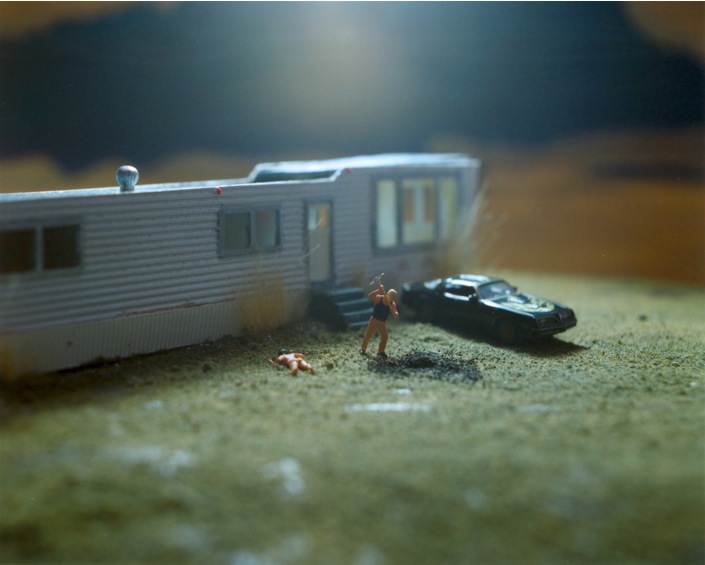
Structures and sculptures that are tiny in scale are engaging: dioramas, miniatures, dollhouses, models, snow globes, terrariums ... I think it's because of the range of responses they can create in the observer: on one hand, they can draw you in to a new miniature parallel world ... on the other, they can make you feel like an outside entity: completely removed and all-perceiving.

Take the miniature dramatic art of Lori Nix,


Jonah Samson's (Dark and Dirty) Dioramas,


and the amazing works of Walter Martin & Paloma Muñoz. They include tiny islands:


... and snow globes:


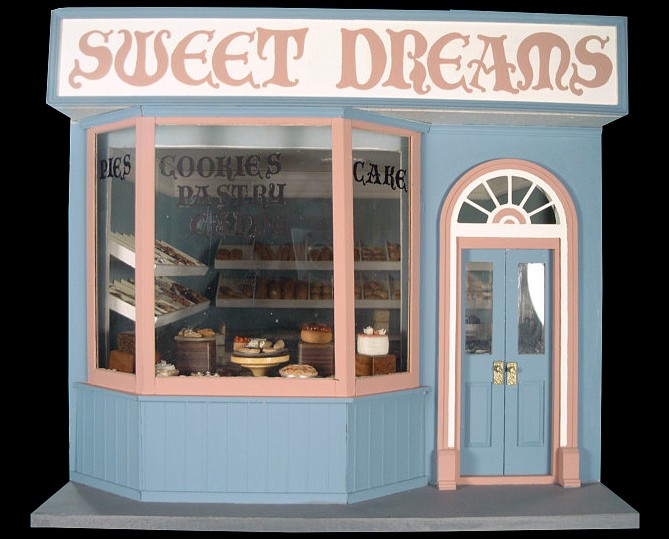
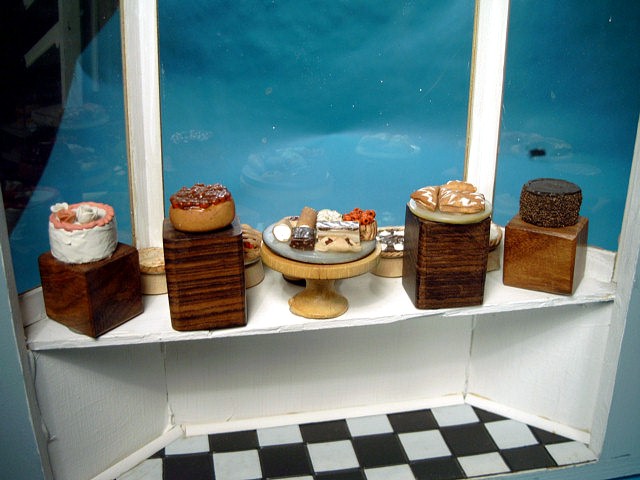
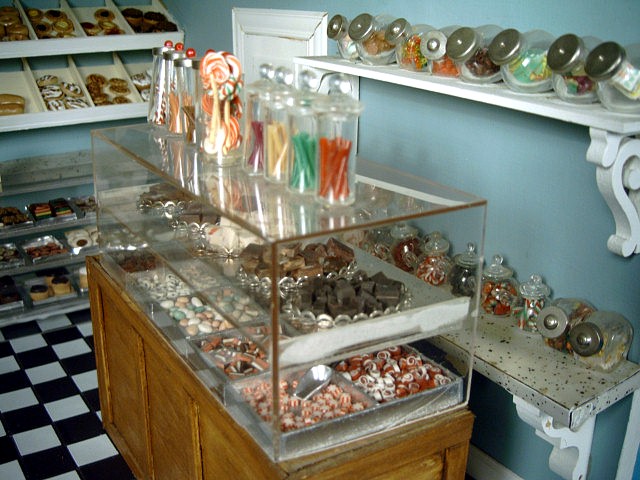
When the sculptures / structures also have a tactile component, there is an added bonus of being able to engage both your senses of sight and touch. For example, it's hard to see a snow globe without wanting to pick it up and shake it, or look at this "Room Box" of a bake shop and candy store and not want to hold one of the tiny cakes:


A closer look:


In a lot of ways, the miniature arts are limited only by the imagination.

Make the world's smallest orange,


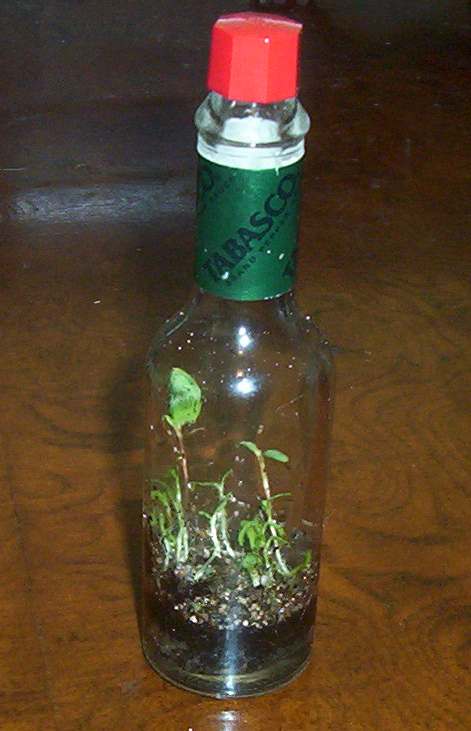
a terrarium in a mini Tabasco bottle,


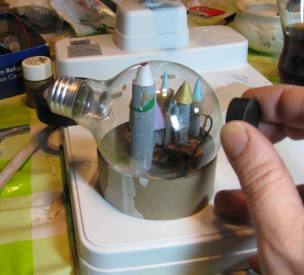
a castle inside a lightbulb diorama,


... or decorate your ceiling with a parallel world, like artist Ji Lee: "People decorate their walls and floors, but most of them overlook their ceilings. It's such a waste of vast space. So I started to install miniature parallel worlds on the ceilings."


Friday, February 27, 2009

Maps


What is this?
Some sort of rare fossil formed in glass or crystal? Seaweed or ferns imprinted into ice? No, this is something you could make. It is a natural fractal pattern formed by air displacing a vacuum that resulted from pulling two glue-covered acrylic sheets apart.

And you thought that any sort of (productive) play with glue ended after Kindergarten ...

Welcome to this blog.
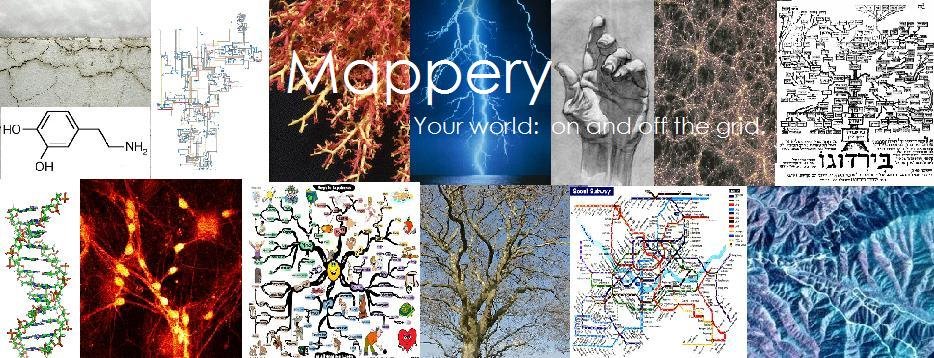
The header of this page includes images representing different types of maps - some of which are fractals and some that are not.

If you're curious, these images are:

Top Row (from left to right):
Snow on top of cracking masonry (first), the structural formula of dopamine (below masonry), a power grid, a cast of the human lungs and circulatory system, lightning, a hand (palm), the universe, a family tree


Bottom Row (from left to right):
DNA, neural networks, a mindmap, a tree with bare branches, Seoul's subway system, a mountain range

Want to make your own fractals, sans paste?

Have any other online examples or tools to share for making fractals? Please share them!